
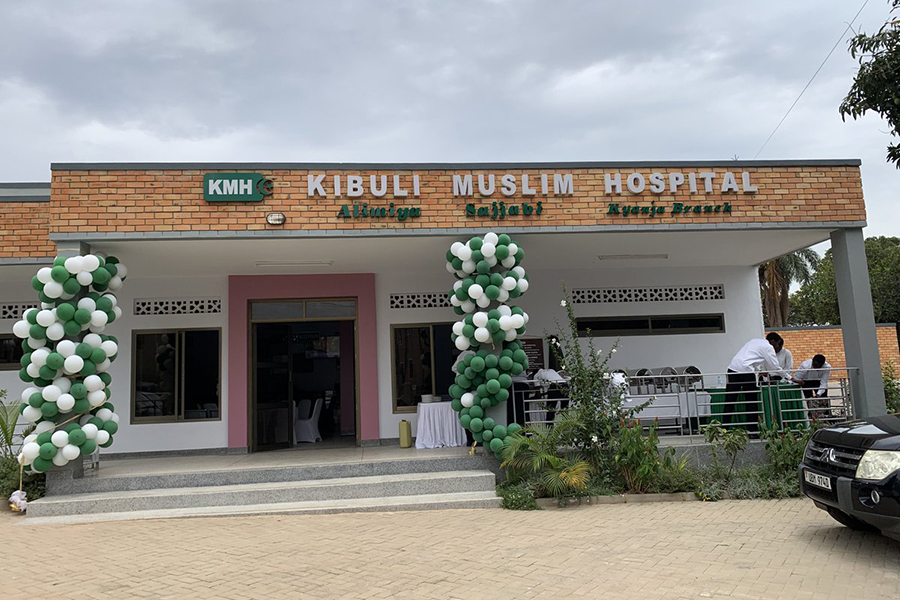
The High Court has ordered Kibuli Muslim Hospital and one of its doctors to pay more than Shs147 million in damages after finding them liable for medical negligence that led to the death of a newborn baby.
In a judgment delivered on July 15, Acting Justice Bonny Isaac Teko ruled that the hospital and Dr Dickens Aturwanaho breached the duty of care owed to Baby Jibreal Jumah Sewankambo, with their cumulative failures materially contributing to the child's death.
The court awarded the child's mother, Ms Jaridah Kyofuna, Shs17.37 million in special damages, Shs100 million in general damages and Shs30 million for loss of expectation of life, bringing the total compensation to about Shs147.4 million.
The award excludes interests of 8% per year on special damages and 6% per year on general damages, as well as the costs.
The suit stemmed from events in October 2018 when Ms Kyofuna, who had attended antenatal care at Kibuli Muslim Hospital throughout her pregnancy, delivered a baby boy by elective caesarean section.
Court records show the baby initially appeared healthy and began breastfeeding normally before developing respiratory distress on the night of October 6, 2018.
According to the mother, repeated attempts to seek medical attention were unsuccessful until the following morning, when the baby was admitted to the neonatal unit.
Doctors diagnosed the baby with suspected haemorrhagic disease of the newborn after finding he was anaemic and thrombocytopenic.
When compatible donor blood could not be obtained, medical staff carried out an emergency direct blood transfusion using the mother's blood. The infant's condition deteriorated and he died on October 9, 2018.
Ms Kyofuna sued the hospital and Dr Aturwanaho for negligent treatment, including delays in medical review, failure to properly investigate her baby's condition and unsafe transfusion procedures.
The court noted that the Uganda Medical and Dental Practitioners' Council, which had been directed to investigate the matter, found several shortcomings in the baby's management.
These included an unexplained delay of about eight hours before meaningful medical review, failure by a consultant neonatologist to physically assess the child, inadequate investigations and deficiencies in the emergency blood transfusion, including lack of documented compatibility testing, inadequate infection screening, uncertainty over informed consent and the use of a nurse whose training and supervision were found wanting.
Justice Teko agreed with those findings.
"The evidence establishes an unexplained delay of some eight hours between the onset of the baby's respiratory distress and his first meaningful medical review," the judge ruled, describing the delay as "a serious departure from accepted practice."
The judge also found that telephone consultations with a specialist could not substitute for physical examination of a critically ill newborn.
"I find that the failure to secure timely, physical specialist review fell below the standard reasonably expected of a tertiary hospital," he ruled.
Although the court accepted that the decision to perform a blood transfusion was intended to save the baby's life, it found the procedure itself failed to meet acceptable medical standards.
"The absence of documented compatibility testing, the absence of proper transfusion equipment... the uncertainty over informed consent... are not minor irregularities," Justice Teko said.
The court, however, stopped short of finding that the transfusion alone caused the baby's death.
Instead, Justice Teko ruled that the cumulative failures—including delayed assessment, inadequate investigations, lack of specialist review and deficiencies in the transfusion procedure—"materially contributed to the fatal deterioration" of the child.
On liability, the judge held that Kibuli Muslim Hospital was vicariously liable for the actions of its doctors and nursing staff because the negligent acts occurred in the course of their employment.
"The negligence lies substantially in the institution's collective management of the child," the court ruled.
In assessing damages, Justice Teko observed that no amount of money could truly compensate a mother for losing her newborn.
"No award can adequately compensate a mother for the loss of a newborn child, particularly one lost after days of visible deterioration despite her repeated appeals for assistance," he said while awarding Shs100 million in general damages.
However, the court declined to award exemplary or punitive damages, finding there was no evidence that medical personnel intentionally harmed the child.
Instead, the judge held that while hospital staff had been negligent, they had been attempting to save the baby's life.
Kibuli Hospital is expected to appeal the ruling that sets a strong warning to medical practitioners on care for patients.
